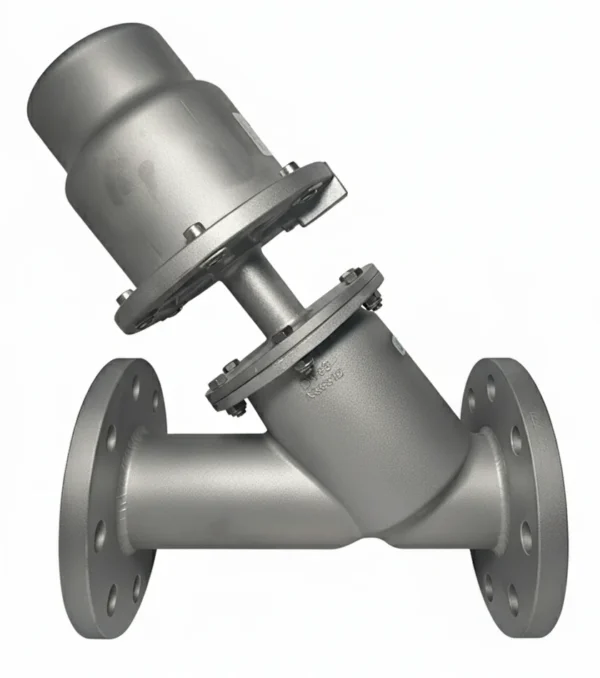
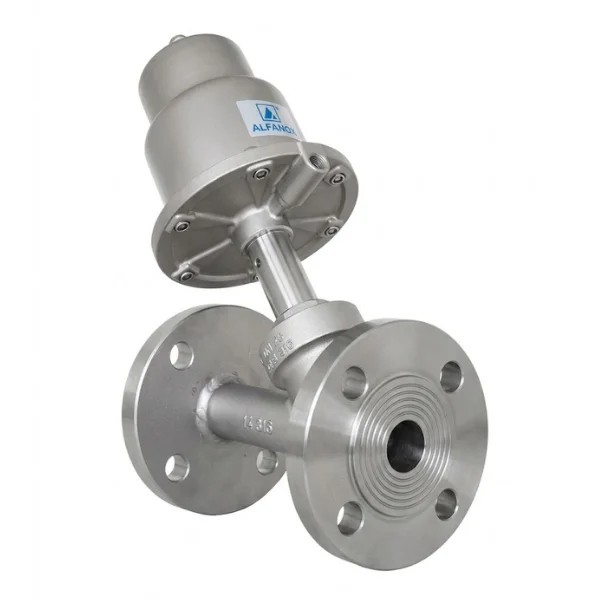
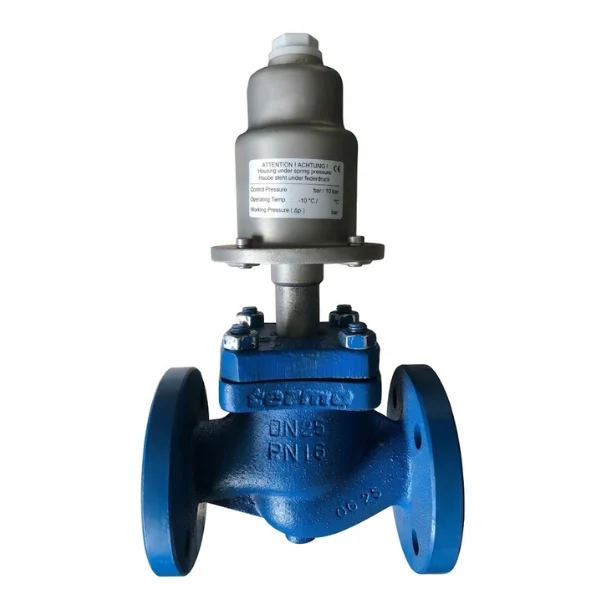
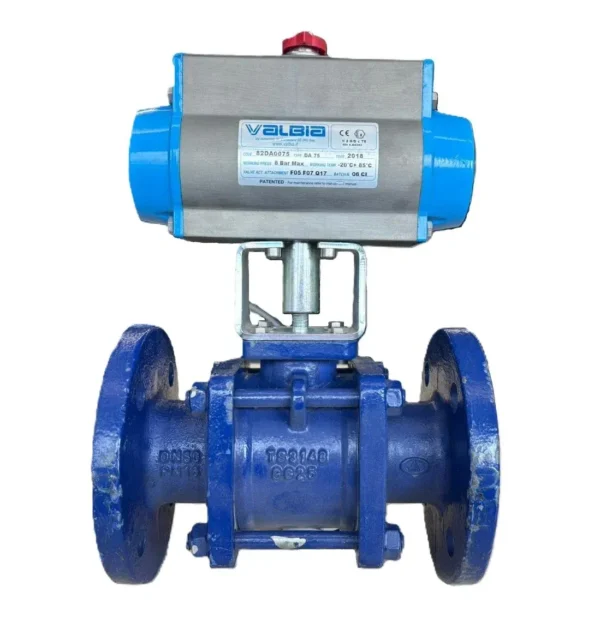
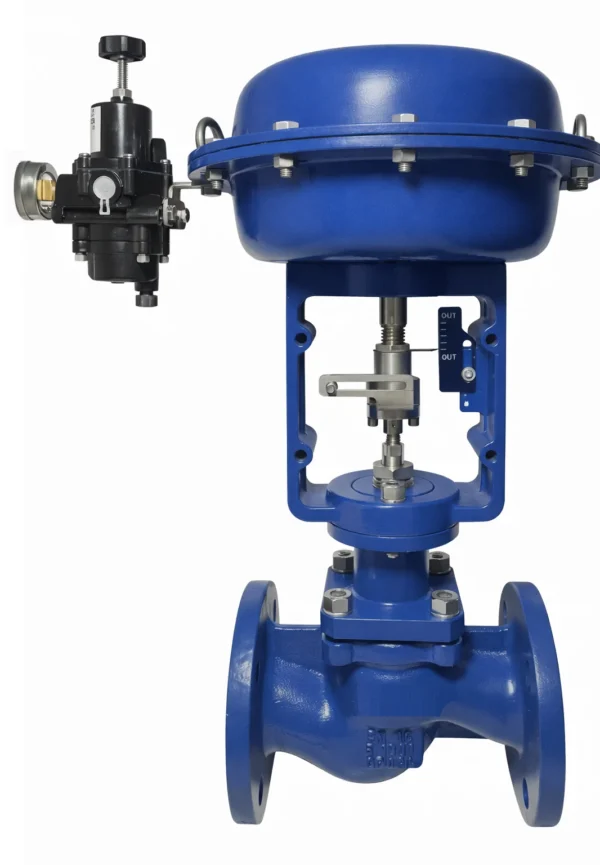
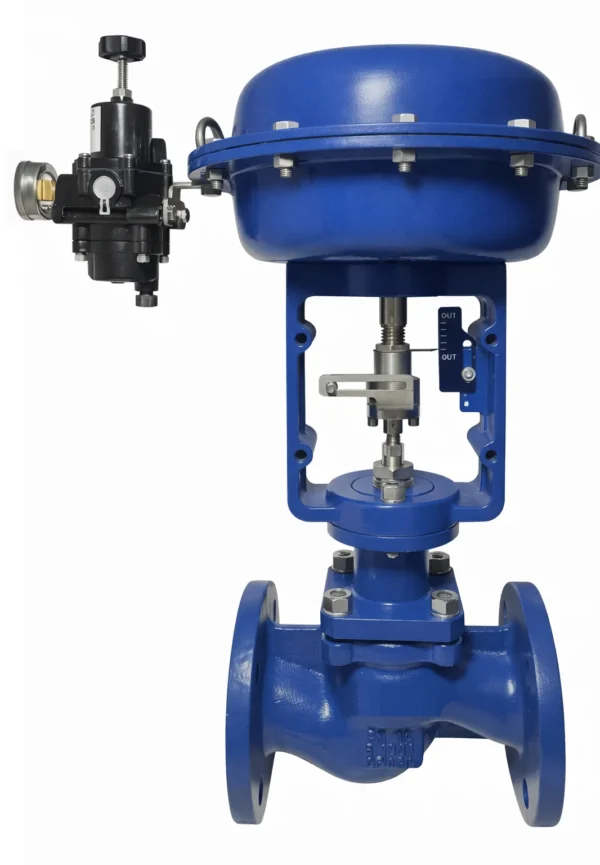
What is an on-off control valve?
An on-off control valve is driven by a pneumatic or electric actuator to a fully open or fully closed position, remotely and automatically. It is used in process automation, filling lines, tank inlets and outlets, CIP systems and heating-cooling circuits to start and stop flow on a control signal.
Types of on-off control valves
Pneumatically actuated valves (fast, reliable, with spring-return option) and electrically actuated valves (where no compressed air is available), in ball, butterfly, angle-seat (piston) and globe designs.
How to choose on-off control valves
- Actuation: pneumatic if compressed air is available, otherwise electric.
- Fail-safe position: normally closed (NC) or normally open (NO) on loss of power/air.
- Supply voltage: 24 V or 220 V AC; position feedback (limit switch) if required.
- Body and seal materials: stainless steel, brass or PVC; PTFE, EPDM, Viton.
On-off control valve range at ORFA
ORFA supplies 1192 on-off control valve models from brands including Sms-tork, Varnasan, Alfanox, Ayvaz, DMS and Valbia. Sizes DN15–DN200; pressure ratings PN10, PN16, PN25, PN40, PN63; connections: threaded, flanged, compression; body materials: stainless steel AISI 316, stainless steel AISI 304, stainless steel, brass, PVC-U. Use the filters to narrow the range by size, pressure rating, connection and material.
On-off control valve prices and supply
On-off control valve prices are shown in USD, excluding local taxes, with worldwide shipping from Türkiye. For project quantities, models not listed or technical selection support, request a quote or call +90 224 444 67 32 — our export team will reply with price, lead time and shipping options.
Frequently asked questions
On-off valve vs modulating valve?
An on-off valve is either fully open or closed; a modulating valve positions itself at intermediate openings according to a 4–20 mA or 0–10 V signal.
Pneumatic or electric?
Pneumatic actuators are faster and more robust where compressed air exists; electric actuators suit plants without compressed air.
What do NC and NO mean?
An NC (normally closed) valve closes when power or air is lost; an NO (normally open) valve opens.